Choosing the right stair nosing is an important part of commercial and industrial stair design. A stair nosing does more than finish the front edge of a tread. It can help define each step visually, improve traction, protect the tread edge from wear, and contribute to the overall safety and durability of a staircase.
For contractors and architects, the challenge is selecting a product that matches the building’s traffic level, substrate, environment, aesthetic requirements, and applicable safety standards. A nosing that works well in a low-traffic office may not be appropriate for a warehouse, manufacturing facility, institutional building, or other demanding environment.
Products such as Wooster stair nosings are available in different profiles and configurations designed for commercial and heavy-use applications. Wooster’s specifications include extruded aluminum safety treads and nosings with abrasive aluminum-oxide filler, as well as multiple profile widths and nose configurations.
What Are Stair Nosings?
A stair nosing is the finished edge at the front of a stair tread. Because this area receives repeated foot contact, it is exposed to significant wear, particularly in commercial and industrial facilities where hundreds or thousands of people may use a staircase every day.
A properly selected nosing can provide a more visible step edge and an additional slip-resistant surface. It can also help protect the tread from chipping, impact, and deterioration at the leading edge.
For commercial construction, stair nosings should be treated as part of the overall stair safety system rather than as a decorative finishing product. The profile, material, dimensions, surface texture, and installation method all need to work together.
Why Nosing Selection Matters in Commercial and Industrial Buildings
Commercial and industrial stairways experience different conditions from typical residential stairs. High pedestrian traffic, work boots, equipment movement, moisture, dirt, cleaning chemicals, and repeated impact can all affect the performance of a stair nosing.
A product that looks appropriate during installation may not remain effective if it is not suited to the environment. For example, a smooth decorative profile may not provide enough traction in an industrial facility where contaminants can reach the stair surface.
Durability is equally important. Replacing worn stair nosings can create additional maintenance costs and may require temporary restrictions on access to the staircase. Selecting a suitable heavy-duty product from the beginning can help reduce premature wear and maintenance concerns.
Aluminum Nosings for High-Traffic Applications
Aluminum is one of the most practical materials for commercial and industrial stair nosings because it combines rigidity with relatively low maintenance requirements. Extruded aluminum profiles can provide a durable structural base while accommodating abrasive or resilient inserts for additional traction.
Wooster’s commercial and heavy-use specifications include extruded aluminum bases with abrasive filler. One example uses 6063-T5 extruded aluminum with aluminum-oxide abrasive material bonded into the profile. (ArcAt)
For architects and contractors, the important consideration is not simply whether a nosing is made from aluminum. The complete system should be evaluated, including the alloy, profile dimensions, surface treatment, abrasive material, fastening method, and expected traffic conditions.
Aluminum can be especially appropriate for busy stairwells, industrial facilities, commercial buildings, institutional projects, and other areas where the leading edge must withstand repeated use.
When Rubber Inserts Make Sense
Rubber inserts provide another approach to stair safety. Depending on the product design, rubber can provide a resilient, slip-resistant surface while creating a visual contrast against the surrounding tread.
Rubber inserts may be particularly useful where comfort, traction, noise reduction, or a softer visual appearance is important. However, contractors and architects should evaluate the specific rubber compound and its resistance to the building’s operating conditions.
Factors such as moisture, UV exposure, cleaning chemicals, temperature changes, and foot traffic can influence long-term performance. A rubber insert suitable for an indoor office stair may not be the best option for an exposed industrial staircase.
The insert should therefore be selected according to the actual environment rather than simply based on appearance or initial price.
Aluminum vs. Rubber Stair Nosings
The choice between an aluminum nosing with an abrasive surface and a profile with a rubber insert depends on the application.
Aluminum with an abrasive surface is often a strong choice where durability and heavy-duty traction are priorities. Rubber inserts can be useful when a more resilient underfoot surface and specific aesthetic or acoustic characteristics are desired.
The substrate also matters. A rigid aluminum profile generally requires a suitable, stable surface for proper installation. The condition of the existing stair should be evaluated before selecting the nosing.
For a high-traffic industrial staircase, durability should generally receive more weight than a small difference in initial product cost. For a commercial interior where appearance and user comfort are equally important, a rubber-insert system may deserve closer consideration.
Consider the Stair Environment
Before specifying a stair nosing, determine where the stairs are located and how they will be used. An interior office stair has very different requirements from a manufacturing plant, warehouse, loading area, parking structure, or exterior emergency stair. Industrial stairs may be exposed to grease, oil, dust, metal particles, moisture, heavy footwear, and frequent cleaning.
Exterior applications introduce additional considerations such as rain, temperature changes, UV exposure, and corrosion. At Wooster Products, we understand that the selected product and finish should be appropriate for those conditions.
Wet or contaminated environments deserve particular attention because the effectiveness of a slip-resistant surface depends on the actual conditions under which it will be used. Material selection should therefore be based on documented product performance and the project’s applicable requirements rather than a general assumption that one material is suitable everywhere.
Understanding Stair Safety Codes
Stair nosing specifications should always be checked against the building codes and accessibility requirements applicable to the project location.
In the United States, requirements can come from multiple sources depending on the building type and application, including the International Building Code, accessibility requirements, OSHA regulations for workplace stairs, and applicable local codes.
For example, OSHA’s general industry stair requirements address dimensions and construction characteristics for workplace stairways. Other requirements may address tread dimensions, nosing projection, leading-edge geometry, and accessibility.
The exact requirement depends on the project, occupancy, jurisdiction, and applicable code edition. Contractors and architects should therefore verify the requirements with the authority having jurisdiction rather than relying on a generic dimension found in a product article.
A useful specification process starts by identifying the governing codes before selecting the profile.
Nosing Projection and Stair Geometry
The projection of a nosing is an important design consideration because excessive or inconsistent projections can affect how people move up and down a staircase.
For projects governed by the International Building Code, stair geometry requirements should be reviewed alongside the nosing manufacturer’s dimensions. The IBC and accessibility standards can contain different provisions, so the applicable requirements need to be considered together.
Uniformity is particularly important. A staircase should not have unexpected changes in tread geometry that can disrupt a person’s natural stride.
Architects should therefore coordinate the nosing profile with the tread depth, riser dimensions, finish thickness, and overall stair assembly before finalizing the specification.
Installation Tips for Contractors
Even a high-quality stair nosing can perform poorly if it is installed incorrectly.
The first step is preparing the substrate. The surface should be clean, stable, and suitable for the selected installation system. Dirt, loose material, old adhesive, moisture, or uneven surfaces can interfere with proper bonding or fastening.
Accurate measurement is also important. Each nosing should be cut and positioned carefully so that the finished installation is consistent throughout the stair flight.
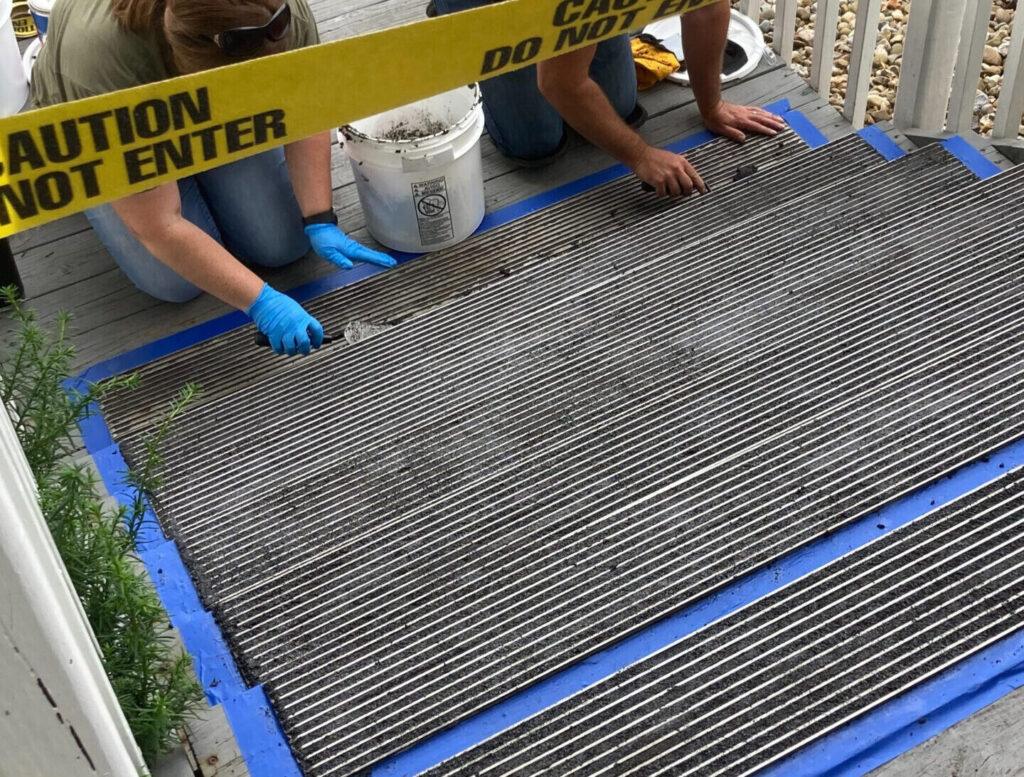
The manufacturer’s installation instructions should be followed for the specific product and substrate. Depending on the system, installation may involve mechanical fasteners, adhesive, or a combination of methods. Commercial and industrial applications generally require a more robust attachment approach than light residential installations.
Installation guidance for aluminum stair nosings also emphasizes accurate measuring, substrate preparation, and selecting the appropriate fastening method for concrete, wood, or metal substrates.
Adhesive vs. Mechanical Fastening
The appropriate attachment method depends on the product, substrate, environment, and project requirements. Adhesive can be useful for suitable substrates and applications, but surface preparation and adhesive compatibility are critical. In demanding commercial or industrial settings, mechanical fastening may provide additional security and should be considered where recommended by the manufacturer.
The manufacturer’s instructions should always take priority. For example, technical installation guidance for certain stair nosing systems specifies extensive adhesive coverage and rolling pressure to achieve proper contact. Contractors should also allow the specified curing period before subjecting the installation to normal traffic.
Maintenance and Replacement Considerations
The best stair nosing is not necessarily the product with the lowest purchase price. Maintenance should be considered over the expected service life of the installation.
A high-traffic facility should evaluate how easily the nosing can be cleaned, inspected, repaired, and replaced. Abrasive surfaces can wear over time, while rubber inserts may eventually require replacement depending on traffic and environmental exposure.
Regular inspection can identify loose fasteners, damaged profiles, worn inserts, or areas where traction has deteriorated.
Facility managers should address damaged nosings promptly because a deteriorated leading edge can become both a maintenance problem and a safety concern.
How to Specify Wooster Stair Nosings
When specifying Wooster stair nosings, begin with the project’s functional requirements rather than a particular model number.
Determine the stair substrate, traffic level, environment, required profile, width, nose configuration, finish, and slip-resistant surface. Then review the manufacturer’s technical information to identify the product that fits those requirements.
Wooster’s published specifications provide multiple heavy-use aluminum nosing configurations, including different widths and nose dimensions. This range can help architects and contractors select a profile appropriate to the stair assembly. (ArcAt)
The specification should also identify the required anchoring hardware and installation requirements. Wooster’s specification guidance calls for manufacturer’s recommended anchoring hardware to achieve appropriate results for the substrate and application. (ArcAt)
Final Thoughts
Selecting the right stair nosing is an important decision for commercial and industrial projects because the product must perform under real-world conditions while fitting the requirements of the overall stair system.
Aluminum nosings can provide a durable solution for demanding applications, while rubber inserts may offer useful traction and comfort characteristics in appropriate environments. Products such as Wooster stair nosings provide multiple configurations that can be matched to different commercial and heavy-use stair applications.
For contractors and architects, the most reliable approach is to evaluate traffic, substrate, environment, stair geometry, applicable safety codes, visibility requirements, installation method, and long-term maintenance before specifying a product. Contact us today to discuss your stair safety requirements and find the right stair nosing solution based on traffic, substrate, safety codes, installation, and long-term maintenance needs.
Frequently Asked Questions
What are the best stair nosings for commercial buildings?
The best stair nosing depends on traffic, substrate, environmental exposure, stair geometry, and applicable safety requirements. Aluminum profiles with appropriate slip-resistant surfaces are often suitable for high-traffic commercial applications, while other materials may be appropriate for specific interior environments.
Are aluminum stair nosings suitable for industrial use?
Yes. Aluminum nosings can be suitable for industrial applications when the profile, surface, alloy, fastening system, and overall design are appropriate for the expected traffic and environment.
What are rubber inserts used for in stair nosings?
Rubber inserts can provide a resilient, slip-resistant surface and may be appropriate where comfort, traction, or a particular appearance is desired. The specific rubber compound should be evaluated for the project’s traffic, moisture, cleaning, temperature, and chemical conditions.
Do stair nosings need to comply with building codes?
Commercial and industrial stair installations may be subject to building, accessibility, and workplace safety requirements. The applicable requirements depend on the project location, occupancy, and governing code.
How should aluminum stair nosings be installed?
Installation depends on the product and substrate. Proper surface preparation, accurate measurement, appropriate cutting, and the manufacturer’s specified fastening or adhesive system are essential.