
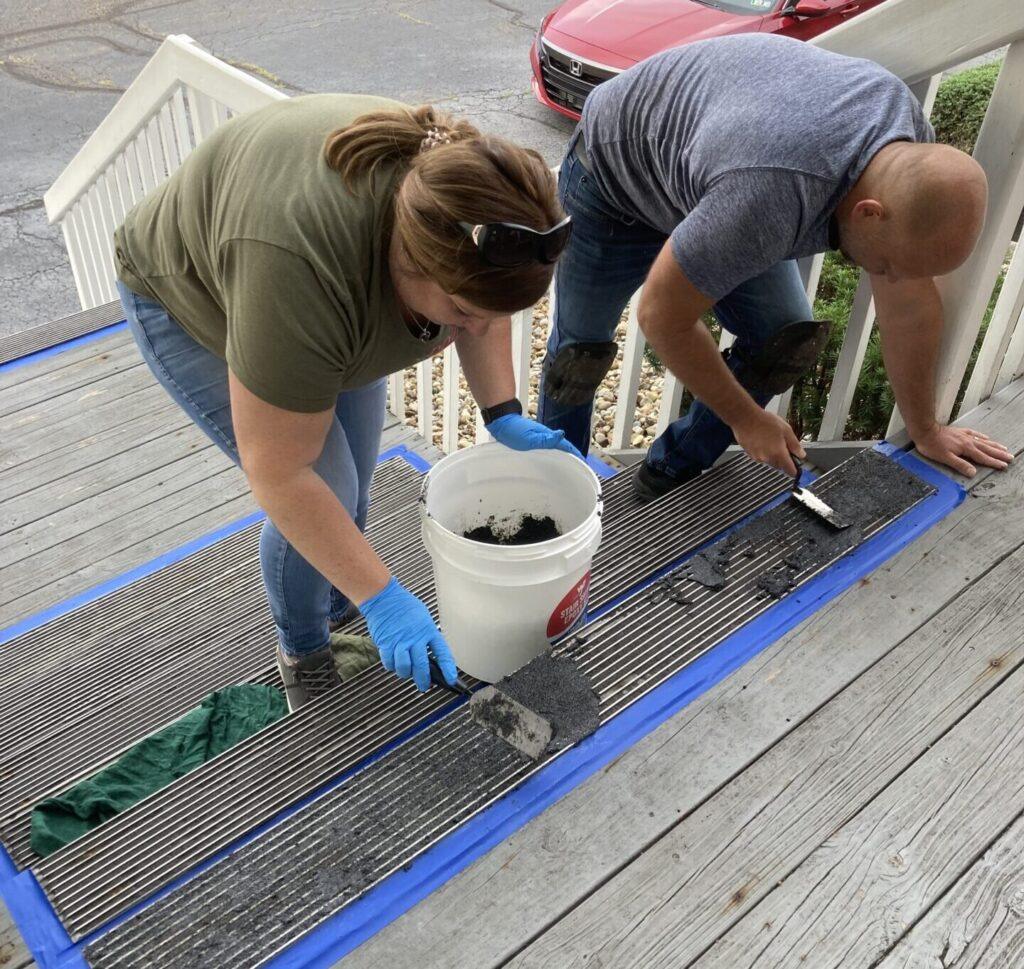
Choosing the right stair tread is an important safety decision for commercial, industrial, institutional, and high-traffic properties. Stairs are exposed to repeated foot traffic, moisture, dirt, cleaning chemicals, oils, and general wear. A tread that looks suitable during installation may not provide the same level of performance after months or years of use.
Two common options are epoxy stair treads and standard stair treads. The better choice depends on the environment, expected traffic, exposure to chemicals or moisture, maintenance requirements, and the level of slip resistance needed.
Epoxy stair treads are often selected for demanding environments because epoxy-based surfaces can be formulated with aggregate or other textures to provide traction while also offering resistance to wear and certain chemicals. Standard treads, however, include a wide range of materials and designs, so they should not automatically be considered inferior.
The most important question is not simply which material is stronger. It is whether the selected tread provides appropriate traction, durability, and resistance for the conditions in which the stairs will be used.
What Are Epoxy Stair Treads?
Epoxy stair treads use an epoxy-based surface system designed to create a durable walking surface. Depending on the product, the surface may incorporate abrasive particles or textured aggregates to improve traction.
This makes epoxy stair treads particularly useful in environments where stairs may be exposed to moisture, oils, dirt, or demanding cleaning conditions. Industrial facilities, workshops, warehouses, commercial buildings, and other high-use areas may benefit from a tread system designed specifically for these conditions.
Epoxy can also be used as part of a larger stair-surface system rather than simply as a decorative coating. The performance of the finished tread depends on the formulation, aggregate, substrate preparation, installation method, and maintenance.
For buyers, this means the word “epoxy” alone should not be treated as a guarantee of slip resistance. The actual product specifications and intended application should be reviewed before selection.
What Are Standard Stair Treads?
Standard stair treads can refer to many different products, including rubber, vinyl, metal, wood, composite, and other manufactured surfaces. Some are designed primarily for indoor commercial applications, while others are intended for industrial or exterior environments.
Because standard treads cover such a broad category, their performance can vary considerably. A high-quality commercial tread with an engineered slip-resistant surface may perform extremely well, while an inexpensive tread that lacks sufficient texture may be unsuitable for a demanding environment.
Therefore, the comparison between epoxy stair treads and standard treads should focus on measurable performance rather than simply the material name.
Slip Resistance: Which Performs Better?
Slip resistance is one of the most important factors when choosing a stair tread. A stair surface can become hazardous when it is wet, oily, dirty, or contaminated with other substances.
OSHA recognizes slip resistance as an important consideration for walking and working surfaces. Its guidance notes that slip resistance can change depending on surface conditions and footwear, and that textured, serrated, or punched surfaces can provide additional resistance in areas exposed to wet, oily, or dirty operations. (OSHA)
Epoxy stair treads can provide strong traction when they are manufactured with an appropriate abrasive or textured surface. The texture can help create mechanical grip between footwear and the stair surface.
However, not every epoxy surface has the same traction characteristics. A smooth epoxy finish intended for appearance may provide very different performance from an industrial epoxy tread containing an aggressive aggregate.
Standard stair treads can also provide excellent slip resistance. Rubber and abrasive commercial treads, for example, may be specifically manufactured for high-traction applications.
Chemical Resistance and Industrial Exposure
Chemical exposure can significantly influence tread selection. Industrial facilities may expose stairs to oils, solvents, cleaning agents, processing chemicals, or other substances.
Epoxy systems are often considered where chemical resistance is important because properly formulated epoxy surfaces can resist many common chemical exposures better than some conventional materials. However, resistance depends on the specific formulation and the chemical involved.
A facility should not assume that any epoxy tread is resistant to every chemical. At Wooster Products, we understand that chemical concentration, temperature, exposure time, and cleaning procedures can all influence performance.
Standard treads can also be manufactured from materials with strong chemical resistance. The correct comparison therefore requires reviewing the manufacturer’s chemical-resistance information for the specific product.
For industrial buyers, this is an area where product specifications matter much more than a generic comparison between “epoxy” and “standard.”
Epoxy vs Standard Treads for Wet Areas
Wet conditions can create an immediate slip hazard. Stairs near entrances, processing areas, wash-down zones, industrial operations, and exterior locations may regularly encounter water.
In these environments, a tread needs more than a durable material. It needs a surface texture that continues to provide traction when contaminated.
Epoxy stair treads with suitable abrasive aggregates can be a strong option for wet environments. However, drainage and stair design also matter. OSHA guidance notes that stairs exposed to wet or slippery conditions should have slip-resistant surfaces, while exterior stairs should be designed to limit water collection.
Standard treads designed specifically for wet environments can perform equally well or better depending on the product. The key consideration is the actual wet-condition performance of the selected tread.
Maintenance Requirements
Maintenance is another important part of stair safety. Even a high-performance tread can become hazardous if dirt, grease, debris, or damaged material is allowed to accumulate.
Epoxy surfaces can be relatively straightforward to clean, but aggressive textures may require appropriate cleaning methods to remove contaminants from the surface.
Standard treads can have different maintenance requirements depending on their material and texture. Rubber, vinyl, metal, and other materials may require different cleaning products and maintenance procedures.
Before selecting a product, facility managers should consider how frequently the stairs will be cleaned, what chemicals will be used, and whether the tread can withstand the property’s maintenance routine.
Installation Quality Matters
The performance of a stair tread depends not only on the material but also on installation.
An improperly installed tread can create raised edges, loose sections, gaps, or other conditions that increase the risk of trips and falls. Surface preparation is particularly important for systems that are bonded or applied directly to existing stairs.
The substrate should be clean, sound, and properly prepared according to the manufacturer’s installation requirements. Damaged concrete, metal, wood, or other substrates may need repair before a new tread is installed.
OSHA requires stairs in covered workplace applications to have uniform riser heights and tread depths, and its construction standard also requires slippery conditions to be eliminated before stairways are used.
This means the tread should be considered as part of the overall stair safety system rather than as a standalone solution.
Which Is More Durable Under Heavy Traffic?
For heavy industrial or commercial traffic, epoxy stair treads may be attractive because of their ability to combine a durable surface with engineered traction.
However, standard commercial and industrial treads can also be specifically designed for heavy traffic. The right product may depend on whether the primary concern is abrasion, chemical exposure, moisture, impact, appearance, ease of replacement, or another factor.
A facility with heavy foot traffic should look at expected traffic volume and the type of footwear used. Industrial work boots, for example, may create different wear patterns from ordinary commercial footwear.
Buyers should also consider how easily damaged sections can be repaired or replaced. In some facilities, a modular replaceable tread may be more practical than a surface system that requires extensive preparation for repair.
Epoxy Stair Treads vs Standard Treads: Key Differences
The biggest difference is usually the type of performance the buyer is trying to prioritize.
Epoxy stair treads can be advantageous when a project requires a hard-wearing surface, strong adhesion, textured traction, and resistance to certain industrial exposures.
Standard treads can be advantageous when buyers want a proven commercial tread material with straightforward installation, replacement, or maintenance requirements. They can also offer excellent slip resistance when the correct product is selected.
For example, an aggressive industrial epoxy tread may be appropriate for a wet manufacturing area but unnecessary for a clean office stairway. Conversely, a basic standard tread may be adequate for a low-risk indoor application but unsuitable for a facility where oil and chemicals are routinely present.
How to Choose the Right Stair Tread
Decision-stage buyers should begin by identifying the actual conditions the stairs will experience. Consider whether the stairs are indoors or outdoors, whether they are exposed to water or chemicals, how much traffic they receive, what type of footwear employees use, and how frequently the stairs are cleaned.
Next, review the tread’s slip-resistance characteristics. Do not rely only on general terms such as “non-slip.” Look for manufacturer testing, performance specifications, and information about the conditions in which the product is intended to be used.
Chemical resistance should also be evaluated when the stairway is located in an industrial or processing environment. The manufacturer should be able to identify which chemicals the product is designed to withstand.
Finally, evaluate installation and maintenance requirements. A high-performance tread that is difficult to install correctly or maintain may not be the best practical choice for every facility.
Conclusion
Choosing between epoxy stair treads and standard treads ultimately depends on the specific demands of the environment. Epoxy stair treads can be an excellent choice for industrial and high-traffic settings where strong slip resistance, durability, and resistance to certain chemicals are priorities. Standard stair treads can also provide reliable safety and long-term performance when the material and design are properly matched to the application.
Rather than choosing based solely on the tread material, buyers should evaluate slip resistance, moisture and chemical exposure, traffic levels, maintenance requirements, installation conditions, and manufacturer performance specifications. The right stair tread is one that provides consistent traction and durability under the conditions where it will actually be used. Contact us today to discuss your stair tread requirements and find a solution designed for reliable traction, durability, and performance in your specific environment.
FAQs
Are epoxy stair treads slip resistant?
They can be highly slip resistant when designed with an appropriate abrasive or textured surface. However, epoxy by itself does not guarantee a particular level of traction. Buyers should review the specific product’s slip-resistance specifications.
Are epoxy stair treads good for industrial buildings?
Epoxy stair treads can be well suited to industrial environments where durability, traction, and resistance to certain chemicals are important. The specific product should be selected according to the facility’s operating conditions.
Are standard stair treads safe?
Yes. Standard stair treads can provide excellent safety when they are properly designed, installed, maintained, and selected for the environment. The term “standard” covers many different materials and product types.
Which is better for wet stairs, epoxy or standard treads?
Either can be appropriate. The most important factor is whether the selected product provides adequate traction under wet conditions. Drainage, cleaning, footwear, stair design, and maintenance also affect slip risk.
Do epoxy stair treads resist chemicals?
Many epoxy systems offer resistance to specific chemicals, but performance varies by formulation. Always check the manufacturer’s chemical-resistance information against the substances present at the facility.